TillerXR
From Service to Software
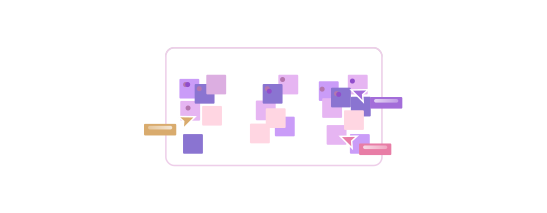
Overview
TillerXR sought to launch a Virtual Reality tour software but lacked market clarity. I led foundational research to define the target user, validate features, and steer the product roadmap from ambiguity to alignment.
Problem Statement
The team relied on unvalidated assumptions, risking a feature-bloated launch that ignored a massive European user base and novice creators.
Users & Audience
Novice VR creators, Real Estate Agents, Architects, and Marketers seeking simple, efficient tour-building tools.
Role & Scope
Lead UX Researcher and Designer
18 months, May 2023 – Oct 2024
Methods & Tools
Constraints
Remote cross-functional team, aggressive launch timeline, and limited startup budget requiring rapid, high-confidence decision-making.
Outcomes
I shaved weeks off the decision-making process by invalidating the US-only assumption. I pivoted development to include multi-language support for the European market. My research directly influenced the product roadmap, prioritizing "ease of use" features that differentiated TillerXR from complex competitors.
This project reinforced that research is a strategic business tool, not just a design phase. By involving stakeholders in the Design Studio, I learned that collaborative synthesis creates faster buy-in than delivering static reports, effectively turning raw data into a unified company vision.
This project reinforced that research is a strategic business tool, not just a design phase. By involving stakeholders in the Design Studio, I learned that collaborative synthesis creates faster buy-in than delivering static reports, effectively turning raw data into a unified company vision.
Next Steps
- Test prioritized features with novice VR creators.
- Assess multi-language support usability in European markets.
More Case Studies
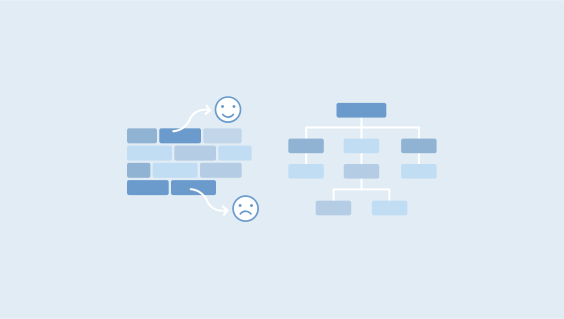
From Family Practice to Specialty Care
Workshops, competitive analysis, and user journey mapping that gave a new specialty practice its brand, its voice, and its direction.

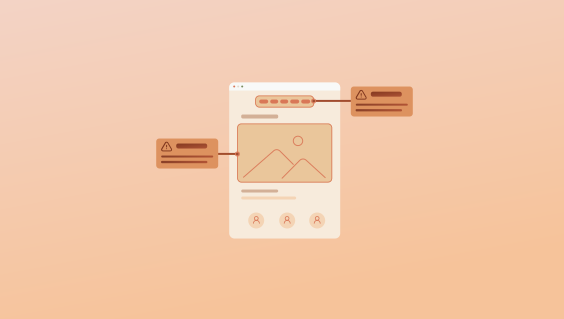
From Interviews to a Redesign Blueprint
Stakeholder interviews, heuristic audits, and competitive benchmarking that helped shape the direction of a $32M non-profit's website overhaul.
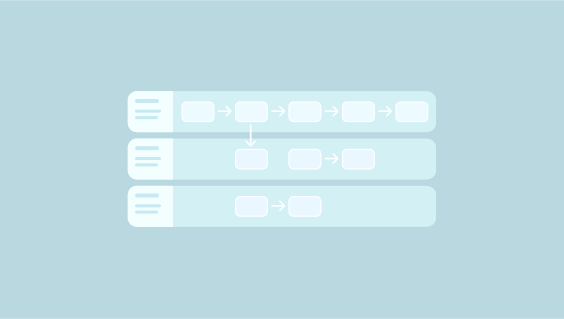
Stop Fixing Tickets. Fix the System.
Service blueprinting that helped a 2,500-member organization find the root cause — and redesign around it.